Berberine HCl, But Actually Absorbed: A Shop Owner's Honest Take
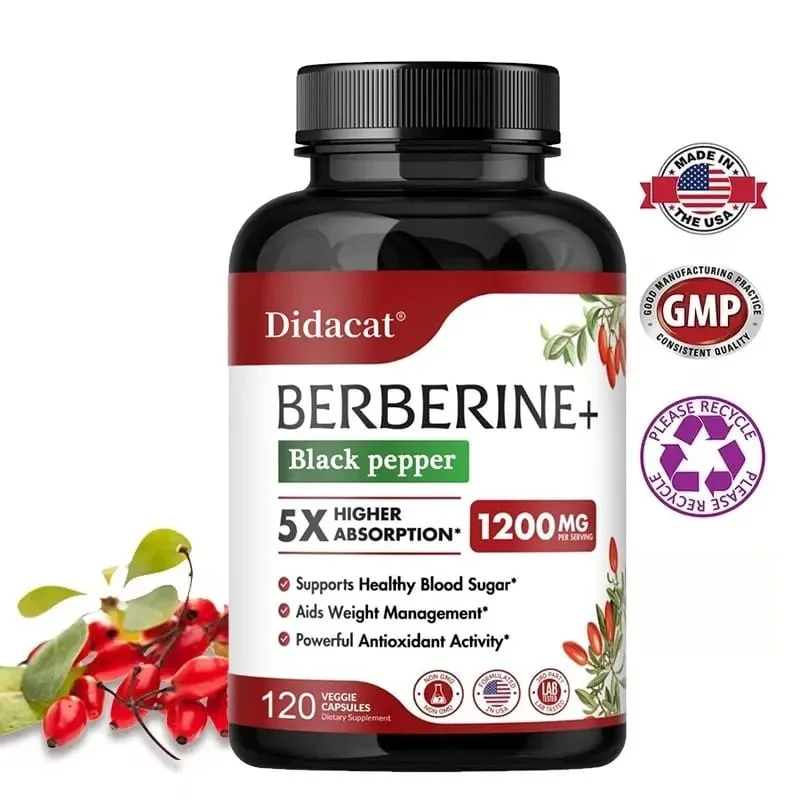
I'll be straight with you — I've sold a lot of berberine over the years, and most of it sits in the same boring bucket. 500 mg capsules, maybe 1500 mg if the label wants to look tough, and a little note about "Black Pepper Extract" that does basically nothing because the dose is laughable. So when our supplier sent over this one — SKU P3256807328132528 — and told me it's 1200 mg with 98% purity and a real absorption story behind it, I rolled my eyes. Then I read the label twice. Then I ordered a case. Here's what's actually inside, what it's for, and where it falls short, because you deserve the whole picture before you hand over your $17.24.
Let's start with what it's made of, because this is where most supplements get vague and I hate that. The active is berberine hydrochloride — the HCl form, which is the one most studied and the one your body actually recognizes. Purity is listed at 98%, meaning the raw material is close to pharmaceutical grade rather than the dusty, tan-colored powder you sometimes see in bargain bins. Then there's BioPerine, which is a branded black pepper fruit extract standardized to piperine. That's the piece that matters here, and I'll explain why in a bit. The capsule shell is vegetarian — plant cellulose, not gelatin — which means it works for vegetarians, vegans, and anyone who just doesn't want animal byproducts in their morning routine. And the whole thing is gluten-free, which sounds like marketing until you meet someone with celiac who's been burned by "natural" supplements with hidden wheat starch in the flow agents. No fillers that I could find worth complaining about. It's a clean formula, and the capsule itself is well-made: no cracked seams, no powder leaking into the bottle, no weird chemical smell when you open the lid. That last one sounds trivial until you've opened a bad batch.
Now the specifications, because people ask me this constantly and I'd rather you know upfront. Each serving is 1200 mg of berberine HCl, and the bottle comes in standard sizes — the 120-count is our main mover, though we stock the smaller count too if you want to test it before committing. It's a capsule, not a tablet, so it's easy to swallow even for people who gag on big pills. There are no color variants on this one — it's a supplement, not a phone case, so what you see is what you get. The capsule is a standard clear-and-white vegetarian shell. Price sits at $17.24, which for a 1200 mg dose with BioPerine is genuinely competitive; I've seen 500 mg bottles with no absorption enhancer go for more than that at big-box stores. If you want exact counts per bottle, check the dropdown on the product page, but the standard sizes are all there.
So what do people actually use this for? Let me give you three real scenarios, because abstract claims are useless. First: the 52-year-old guy who comes in every few months, labs in hand, borderline cholesterol numbers, doctor told him to try lifestyle changes before statins. He takes berberine with breakfast and dinner, walks his dog twice a day, and comes back six months later with numbers that made his doctor squint. Second: the woman in her thirties who's been struggling with stubborn weight around the middle despite eating reasonably. She's not looking for a miracle — she's looking for something that supports blood sugar regulation so her cravings don't spike at 3 p.m. and wreck her evening. Third: the traveler, the person who picks up a stomach bug every time they visit family overseas, because berberine has a long history of use for GI support. That's the practical stuff. Metabolism, cholesterol, weight management, digestion, immune support — not because berberine is magic, but because blood sugar and gut health touch all of those systems.
How do you take it and keep it working? Simple: one capsule with a meal, typically once or twice a day depending on what your healthcare provider suggests. Food matters here. Berberine on an empty stomach can be rough for some people — mild cramping, a little queasiness — and taking it with a meal both eases that and improves uptake. Store the bottle somewhere cool and dry, away from the bathroom cabinet steam, cap tight. You don't need to refrigerate it. Don't leave it in a hot car, don't crush the capsules into smoothies thinking you're being clever (it tastes bitter and you'll lose some of the timed release benefit). And give it time — four to eight weeks before you judge it. Nothing that works on metabolism works in three days.
Now the honest cons, because I'm not here to sell you a fantasy. One: berberine can interact with medications — blood sugar meds, blood pressure meds, certain antibiotics, and others. If you're on prescriptions, talk to your doctor or pharmacist first. That's not me covering myself; that's a real safety note. Two: some people get digestive adjustment in the first week, mild and usually temporary, but it happens. Three: it's not a weight loss pill. If you take this and keep eating the way you always have, you'll be disappointed, and you'll blame the product. Four, and this is the one nobody mentions — berberine isn't meant for long-term continuous use for everyone. Many practitioners suggest cycling it. And it's not for pregnancy or breastfeeding. Those aren't flaws, they're boundaries.
Here's the technical reason this design works, and why I think it suits a specific kind of person. Plain berberine has a well-documented problem: poor oral bioavailability. Your gut doesn't absorb much of it, and your liver clears what it does absorb quickly. That's why you see those 1500 mg bottles — they're compensating with brute force. What BioPerine does is inhibit certain enzymes in the intestinal wall and liver that break berberine down, so more of it survives the trip into your bloodstream. Five times better absorption, as the supplier states, is the difference between swallowing a pill and actually getting the dose you paid for. So who does this suit best? The person who's done their homework, wants a real 1200 mg dose in one capsule instead of choking down three, values a vegetarian and gluten-free formula, and understands that supplements support a lifestyle rather than replace one. It's not for the person expecting a shortcut.